The Homeowner's Essential Electrical Safety Checklist
Spot hidden hazards before your free $150 safety inspection – a room-by-room guide from VoltSmart Electrical
This checklist helps Melbourne homeowners identify common electrical issues that can lead to fires, shocks, or costly repairs. Use it to walk through your home and note any problems – then book a professional safety inspection with VoltSmart to receive a detailed report valued at $150, absolutely free with any service booking.
☑ Complete Checklist
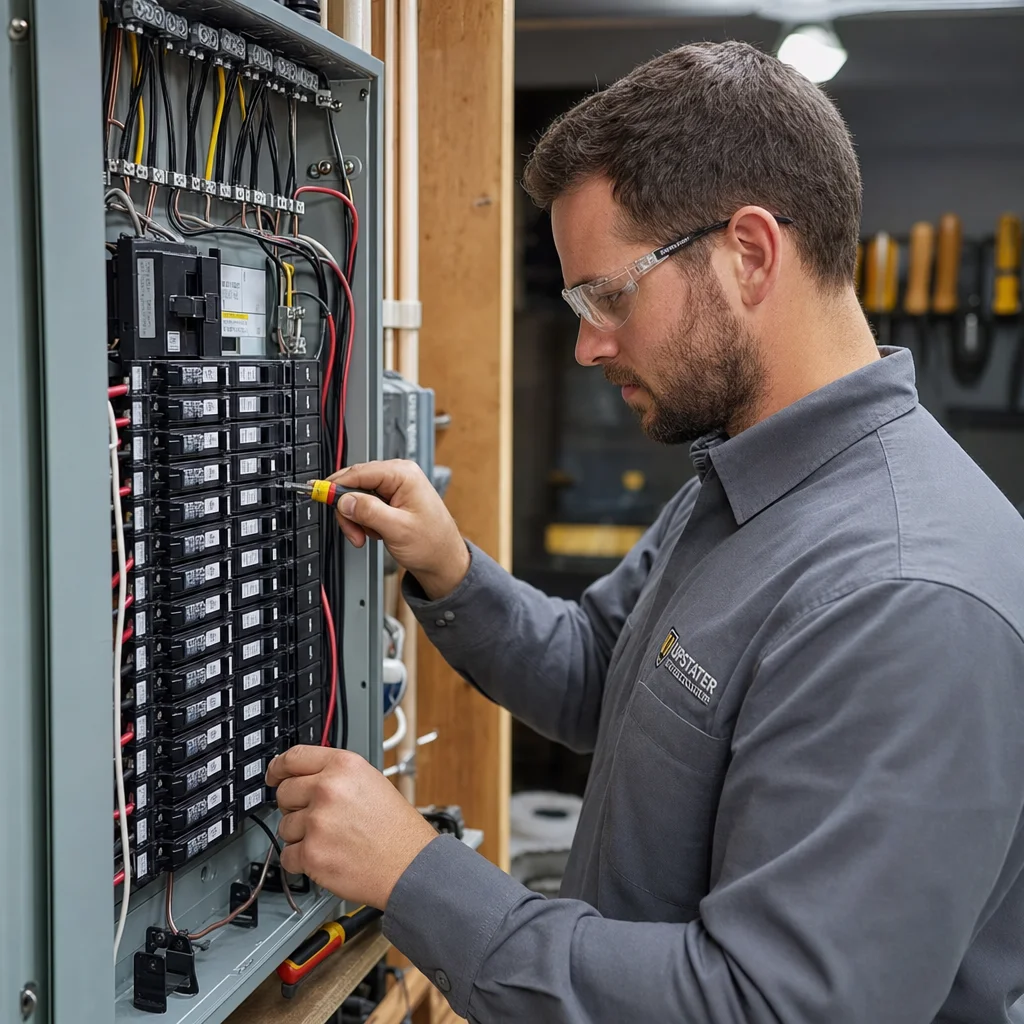
Switchboard & Circuit Protection
- ☐Check that your switchboard has safety switches (RCDs) protecting all circuits – look for a 'T' or 'TEST' button.
- ☐Ensure the switchboard cover is secure and free from rust, dust, or signs of moisture inside.
- ☐Listen for any buzzing, crackling, or humming sounds coming from the switchboard.
- ☐Verify that circuit breakers are clearly labelled – unlabelled panels make fault-finding dangerous.
- ☐Press the 'TEST' button on each RCD monthly; if the switch doesn't trip instantly, call a licensed electrician.
- ☐Look for any scorch marks, melted plastic, or discolouration around breakers or fuses.
- ☐Confirm that no double-tapped neutrals exist (i.e., more than one neutral wire under a single screw).
Outlets, Switches & Power Points
- ☐Inspect every power point for cracked or broken plastic, loose socket inserts, or signs of overheating.
- ☐Test that all GPOs (General Purpose Outlets) are firmly mounted – wobbly outlets indicate loose wiring.
- ☐Check if any outlet feels warm to the touch when in use – a clear sign of overload or poor connection.
- ☐Ensure no power point is located within 1.5 metres of a water source without a weatherproof cover (e.g., near kitchen sinks, laundry tubs).
- ☐Look for signs of child tampering – if safety shutters don't close properly, replace the outlet.
- ☐Verify that outdoor power points have a weatherproof 'in-use' cover and are RCD protected.
- ☐Test each switch by turning it on and off – it should click cleanly and not flicker lights.
Lighting Fixtures & Ceiling Fans
- ☐Check for any flickering or dimming lights – this may indicate loose connections or incorrect lamp wattage.
- ☐Ensure all downlights (especially halogen) have at least 150 mm clearance from insulation – use IC-rated fittings.
- ☐Inspect ceiling fans for wobbling, unusual noises, or frayed pull chains that could short against the housing.
- ☐Look for discoloured or yellowed lamp holders – a sign of excessive heat build-up.
- ☐Verify that all light globes are screwed in firmly but not overtightened (which can damage the socket).
- ☐Check that decorative pendant lights are hung correctly and not resting on combustible materials.
- ☐For LED downlights, confirm the driver (transformer) is accessible for future replacement and not buried in insulation.
Appliances, Cords & Power Boards
- ☐Inspect every appliance cord for cuts, fraying, exposed wires, or chew marks (pets/rodents).
- ☐Never daisy-chain power boards – plug only one power board directly into a wall outlet.
- ☐Check that all power boards have overload protection (a reset button) and are not covered or hidden under rugs.
- ☐Ensure major appliances (oven, AC, washing machine) have dedicated circuits – look for single‑socket outlets on separate breakers.
- ☐Pull out appliances like fridges and washing machines to check that cords are not pinched or trapped against walls.
- ☐Test that all outdoor extension leads are rated for outdoor use (e.g., marked 'H05RN-F') and kept dry.
- ☐Verify that any hardwired appliance (e.g., dishwasher) has an accessible isolation switch within 1.5 metres.
Outdoor & Solar Connections (if applicable)
- ☐Check that all outdoor lighting fittings are weatherproof (IP65 or higher) and free from cracks or missing seals.
- ☐Inspect solar panel wiring for visible damage, connectors that are not fully mated, or signs of animal nesting.
- ☐Ensure the solar inverter is in a shaded, well-ventilated location and that its DC isolator switches are clearly labelled.
- ☐Look for exposed copper on earthing conductors – the green/yellow wire should be fully insulated to the connection.
- ☐Verify that any garden shed or pool pump sub‑panel has its own RCD and is protected from moisture ingress.
- ☐Test that the EV charger (if installed) has a dedicated circuit and that the charging cable is free from cuts or abrasions.
- ☐Confirm that all outdoor power points have lids that close tightly and that no earth stakes near footpaths are loose or rusted.
💡 Pro Tips from the Experts
💡 Respect Arc Fault Nightmares
A single loose screw in a power point can cause arcing that generates 3,500°C – hot enough to ignite timber inside your wall; always use a licensed electrician for any repair.
💡 Know Your MEN Connection
Melbourne homes rely on a Multiple Earthed Neutral (MEN) system – never touch the metal switchboard enclosure if you suspect a fault; it could be live.
💡 Turn Off Before You Test
When checking outlets or sockets, always turn off the circuit breaker first and use a non‑contact voltage tester (e.g., a Fluke VoltAlert) to confirm power is off.
💡 Avoid DIY on Live Parts
In Victoria, residential electrical work must be done by a licensed electrician (registration required) – even changing a power point yourself is illegal and voids your home insurance.
💡 Upgrade Old Switchboards First
If your switchboard still has ceramic fuses or grey resin backboards, consider a full upgrade before installing an EV charger or solar – modern RCDs save lives.
💡 Let Your Inverter Breathe
Solar inverters hate heat; ensure at least 200 mm clearance on all sides and never stack boxes or tools against it – restricted airflow cuts efficiency and reduces lifespan.
This guide is for informational purposes only and does not replace a professional on‑site electrical inspection. Always engage a licensed electrician for any work or if you suspect a fault. VoltSmart Electrical accepts no liability for actions taken based solely on this checklist.